
Product Structure
Categories, product types, variations, information, images, attributes, and navigation should make it easier for customers to understand what is available.
Ecommerce Websites
A good ecommerce website needs more than a product grid and a checkout. The store structure, buying journey, products, payments, content, management, and wider business website need to work together.
I build WooCommerce and Shopify websites around the practical requirements of the business rather than starting with a predetermined store template.
Pretoria, South Africa · Working with businesses across South Africa and internationally
The Right Fit
The right ecommerce setup depends on what you sell, how products are organised, how customers choose between them, how orders are handled, and what needs to happen after checkout.
For some businesses, ecommerce is the centre of the website. For others, the store sits alongside services, company information, content, enquiries, or other parts of the business.
The platform and technical setup should follow those requirements rather than forcing the business into a structure that does not fit.
Ecommerce Foundations
These are four of the main areas I consider when planning an ecommerce project.
Categories, product types, variations, information, images, attributes, and navigation should make it easier for customers to understand what is available.
The path from browsing to product selection, cart, checkout, and confirmation should remain clear and practical throughout the purchase.
Payment, delivery, order handling, customer communication, and related operational requirements need to be considered as part of the website build.
The store also needs to be manageable after launch, including products, content, orders, updates, and the ongoing technical work appropriate to the chosen platform.
Platform Choice
Both can be appropriate. The better choice depends on the business, the wider website, the required functionality, and how the store will be managed.
WordPress Ecommerce
WooCommerce can be a strong fit where the ecommerce store needs to sit within a broader WordPress website or where the project requires more control over the surrounding site and functionality.
Dedicated Ecommerce Platform
Shopify can suit businesses that want a hosted ecommerce platform with the store and its management centred around Shopify's own ecosystem.
Project Scope
The exact scope depends on the store and approved requirements. A project can include a combination of the following.
The Buying Journey
The store should support the decisions a customer needs to make without creating unnecessary friction.
Customers need a practical way to browse, search, filter, or navigate to the products that are relevant to them.
Product pages should provide enough useful information for the customer to understand what they are considering.
The cart and checkout should make the next step clear while collecting the information required to process the order.
Order confirmation, transactional communication, fulfilment, and ongoing store management form part of the wider ecommerce experience.
Ecommerce Work
Padstal Deli is an example of ecommerce work combining a business website with a full WooCommerce online store.
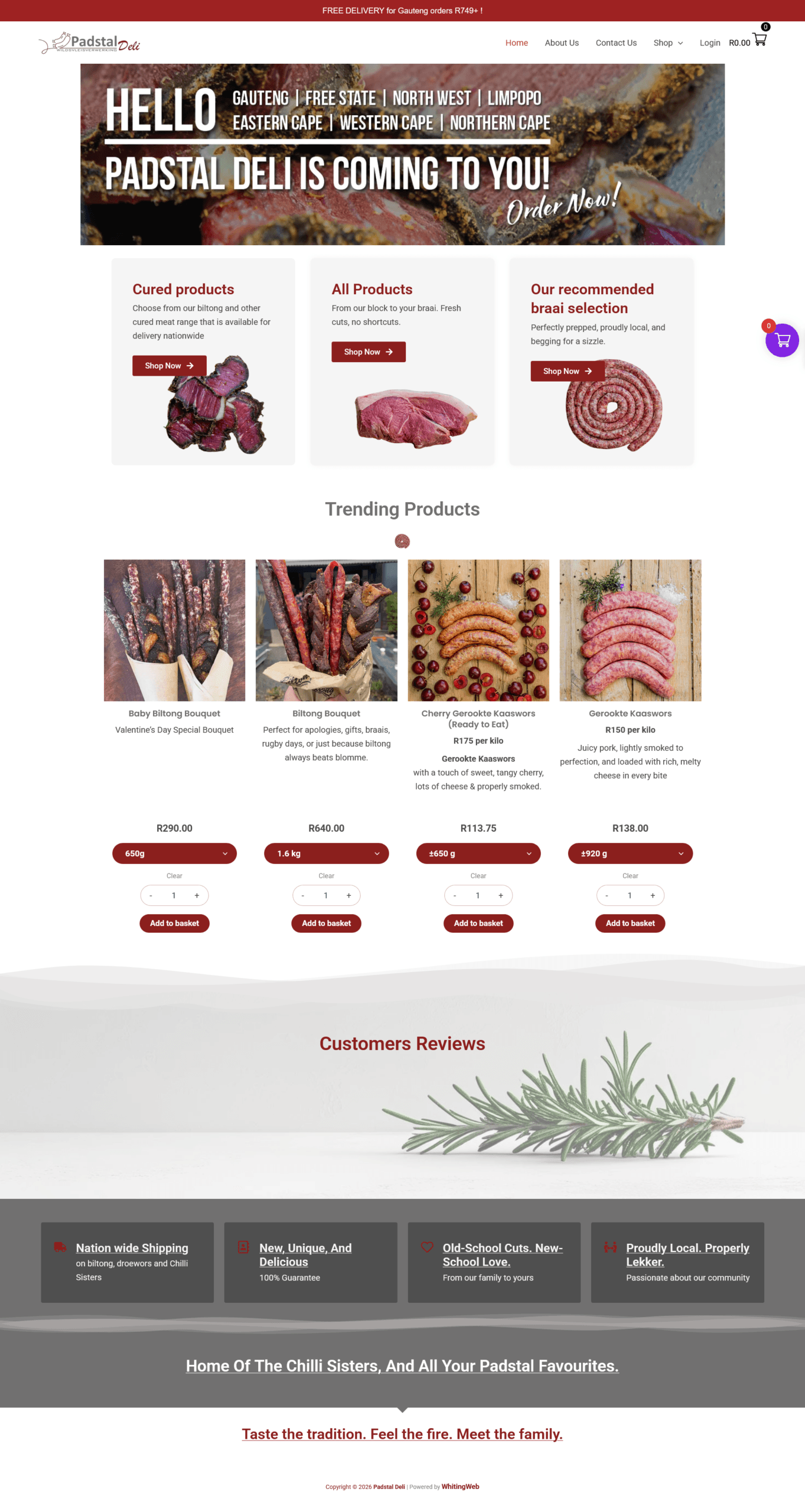
The project combined a WordPress business website with a full WooCommerce ecommerce store for an online butcher, including product presentation and the wider site around the store.
The link below opens a preserved version representing the website completed for the project rather than the client's current main website.
Process
The exact work depends on the store, but the project follows a clear sequence from discovery through to deployment.
I discuss the business, products, audience, current systems, store requirements, and what the ecommerce website needs to do.
Where relevant, I review the existing website, products, content, branding, hosting, integrations, and operational requirements before defining the build.
The required work is defined clearly enough to agree the platform, project scope, and quotation before the main build begins.
The store and wider website are designed and developed around the approved structure, content, products, and functionality.
The website is reviewed and refined, with the relevant store journeys and functionality checked before final approval.
The approved ecommerce website is deployed, with training, hosting, maintenance, or ongoing support available afterwards where required.
After Launch
Products change, software is updated, operational requirements evolve, and ecommerce websites need ongoing attention just like other business systems.
You can manage the store internally where that suits the business and the chosen platform.
Training can form part of the handover where you need help understanding the relevant day-to-day store management.
WhitingWeb can remain involved with hosting, maintenance, optimisation, technical support, and appropriate ecommerce support after launch.
Explore Hosting & Website CareCommon Questions
Yes. WooCommerce is available for ecommerce projects where WordPress and WooCommerce are appropriate for the business and approved requirements.
Yes. Shopify is also available where a dedicated hosted ecommerce platform is the better fit for the project.
There is no single answer for every business. The appropriate choice depends on the wider website, products, management requirements, functionality, integrations, and how the business wants to operate the store.
Potentially. I first need to review the existing website and its technical setup to determine whether extending it makes sense or whether a broader rebuild would be more appropriate.
Yes. Ongoing hosting, maintenance, optimisation, technical support, and appropriate ecommerce support can be arranged where required.
Start an Ecommerce Project
Tell me what you sell, what already exists, and how you need the store to work. You do not need to decide between WooCommerce and Shopify before getting in touch.
Pretoria, South Africa · Working with businesses across South Africa and internationally